Jānis Mitrēvics
The world in Jānis Mitrēvics’s works is revealed as a kaleidoscope of events and rules flashing at a tremendous pace, which time constantly shakes into new and new constellations.
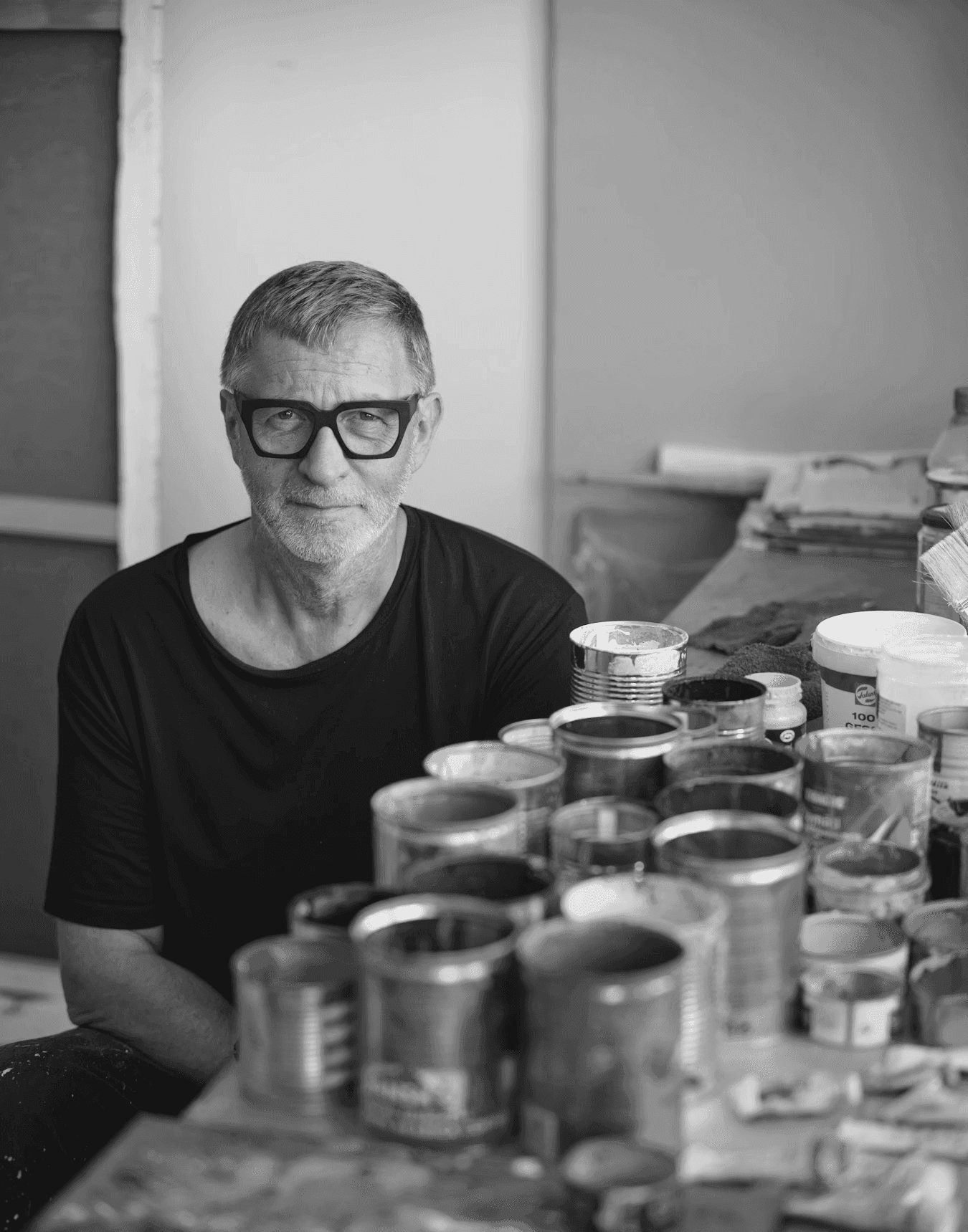
Since the 1980s, Jānis Mitrēvics (1957) has been part of a group of painters who, at the end of 1990, realized a significant exhibition in Latvia during the times of the Third Awakening - “Gentle Fluctuations”. The focus of this project was not only the artworks, but also the time of creation and the image of the author. Critics called it a “painter’s theater”, because the exhibition began in an empty hall and the artworks were created before the eyes of the audience. With projects such as “Marmalade (Poussin and dry flowers)” (1991), “Works” (1992), “"Jānis Mitrēvics exhibits Vilhelms Purvītis…” Ivars Runkovskis” (1994) and “Hula Hoop” (1996), he implemented an unprecedented application of the postmodernist principle of reference in Latvia. The exhibits pointed to each other and Purvītis could no longer be distinguished from the grains. Changing direction drastically and focusing on the reflections of reality in art, four solo exhibitions were created: “Paris. New Reality” (1997), “Landscape. New Reality” (1998), “Act. New Reality” (1999) and “Sin. New Revelation” (2001). In 2000, Jānis Mitrēvics founded the company “Dd studio” and for more than twenty years, abandoning individual works, has been working on the modernization of museum exhibitions and the introduction of digital products in them. “Dd studio” created more than forty expositions in Latvia and abroad, including the Ventspils Museum (2001), the Latvian Popular Front Museum (2013), the Anatomy Museum of Riga Stradins University (2020). The exposition of the Gobustan Petroglyph Museum created by “Dd studio” won the European Museum of the Year Award in 2013. Since 2021, Jānis Mitrēvics has resumed painting in an individual studio and held a solo exhibition “RE-EVOLUTION” in 2024. The solo exhibition “DOLLHELL” is Jānis Mitrēvics’s most ambitious show in latest years. Photo: Gvido Kajons.
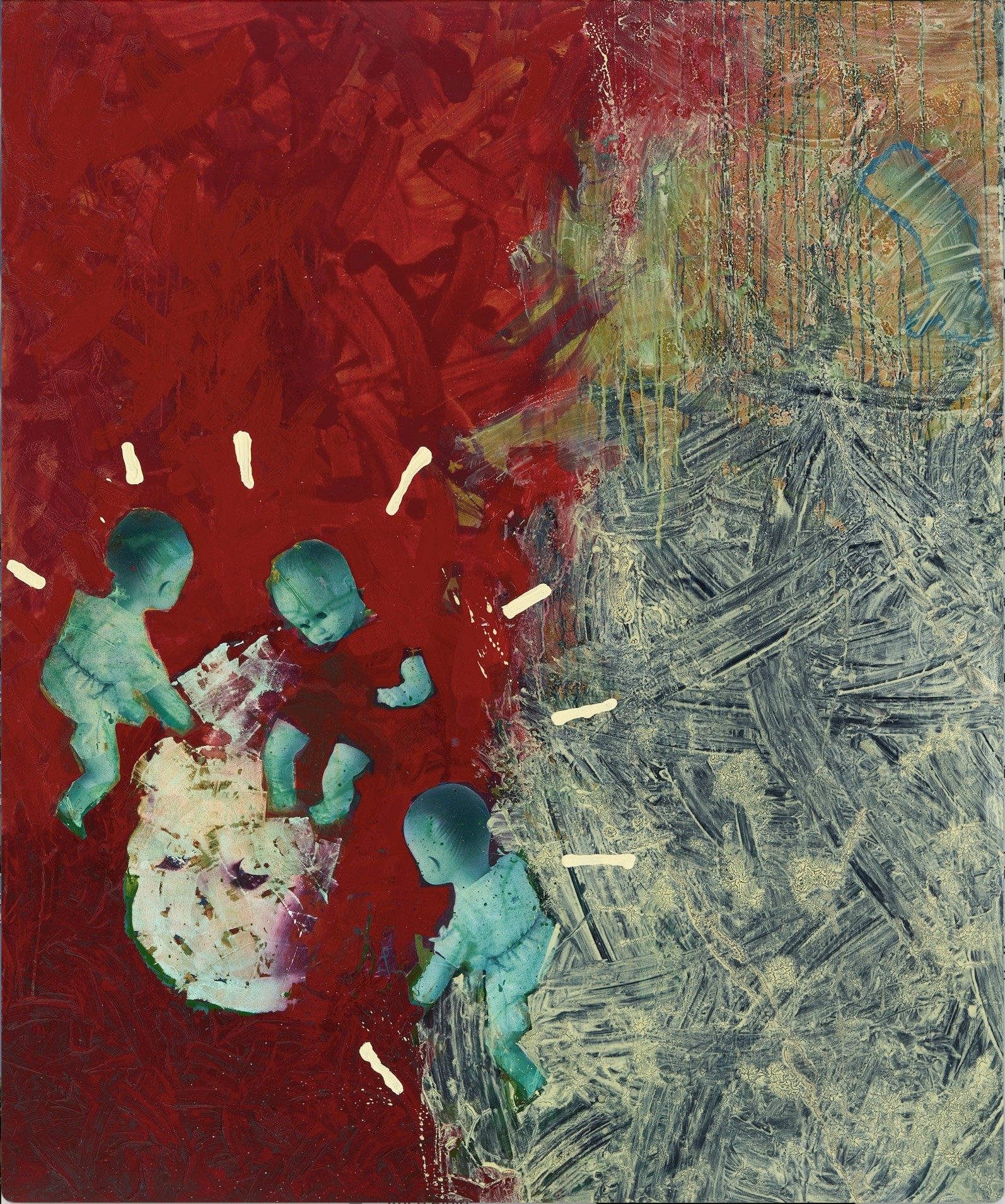
An essential aspect of Jānis Mitrēvics’s art is the study and discovery of painting. He sees himself in the context of schools and traditions, because the tradition of art is to always deconstruct itself and always renew itself. “Since the eighties, I have been creating my own alphabet and grammar. You could say that if there were fifty letters in the beginning, now many have been discarded, but two hundred and fifty more have been added,” says Mitrēvics about his painting. When in the nineties there was a tendency to question the usefulness of painting, Mitrēvics emphasized painting as a universal artistic language, as a basis for artistic expression, even if he used alders, strings, leather, plastics, Soviet-era high-rise buildings, ducks, text and video cameras in his works. The painterly nominal will certainly be noticeable in Jānis Mitrēvics’ porcelain sculptures at the solo exhibition “DOLLHELL”.